A journey to Tibet
After returning from my trip to Tibet, I’ve been eager to write something to share with everyone. However, eight days is far too short a time to truly understand a foreign ethnic group. Though I have a million thoughts bottled up inside, I’m at a loss as to where to begin. After struggling for a while, I’ve decided to just start writing something, anything.
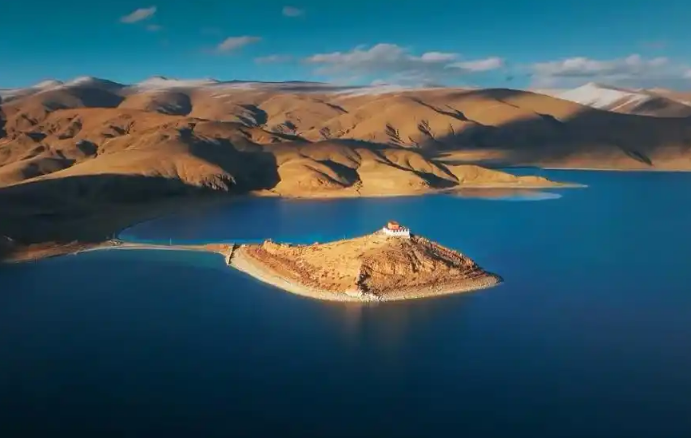
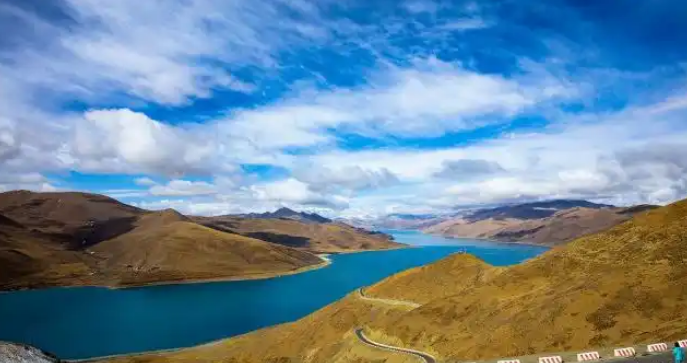
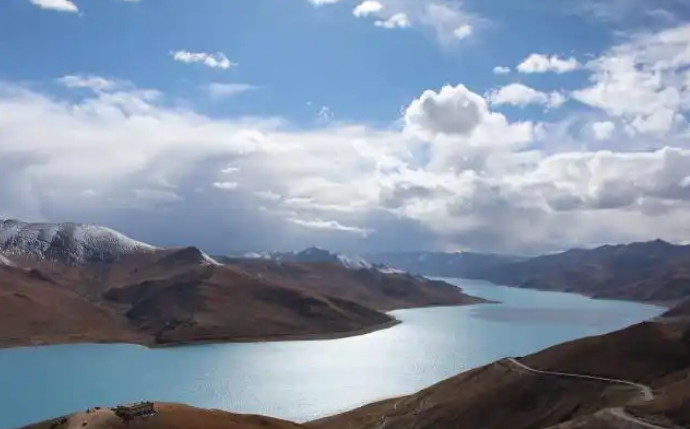
Our journey began in Lhasa. We crossed the Yarlung Tsangpo River to the south and circumambulated the sacred Yamdrok Lake counterclockwise, reaching Nangartse County and Lhoka County in Shannan Prefecture before finally returning to Lhasa.
We flew into Tibet from Chengdu, Sichuan, with an abrupt elevation gain of over 3,000 meters. The sun in Lhasa greeted me with parched lips and a racing heart—typical symptoms of altitude sickness.
To avoid altitude sickness, visitors to Tibet usually take Rhodiola rosea, a traditional Tibetan medicine, 10-15 days in advance. This herb gradually reduces the body’s oxygen demand, thereby mitigating altitude sickness. It’s readily available in pharmacies in capsule or oral solution form.
I thought I was in great shape and would be fine without it. However, my overconfidence led to a day spent lying in the hotel, enduring a splitting headache and struggling to catch my breath.
Thankfully, the human body has remarkable adaptive capabilities. By evening, the altitude sickness had begun to subside, and by the next day, I was back to my old self.
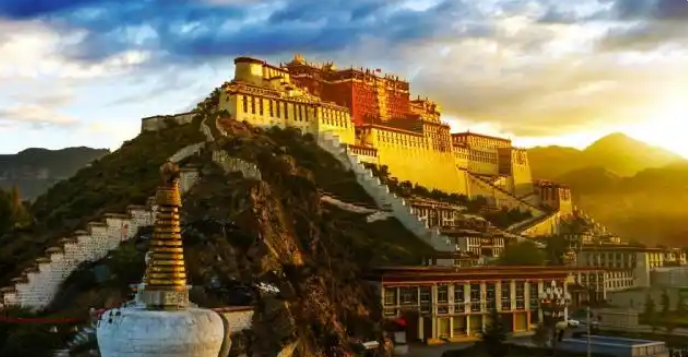
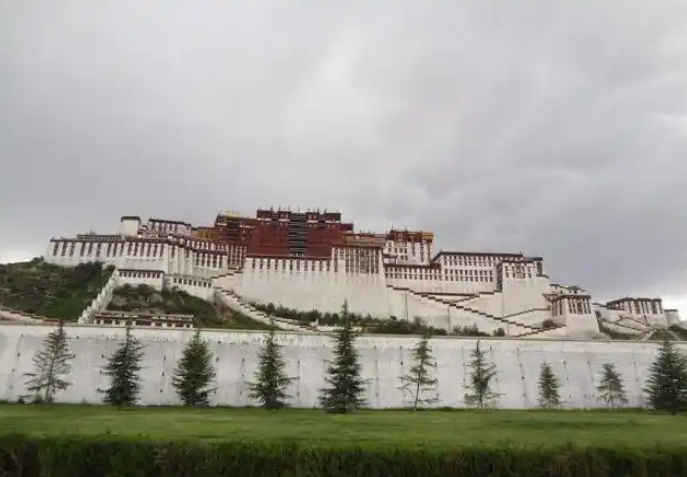
On the second day, we explored Lhasa on our own. First up was the world-famous Potala Palace, the residence of successive Dalai Lamas. Built against the mountain, the palace boasts a grand exterior but is divided into countless small rooms. Only a fraction of it is open to the public, and even that takes a whole morning to explore.
Next were the Jokhang Temple and Ramoche Temple, symbols of the establishment of Tibetan Buddhism in Tibet. In an effort to promote Buddhism in Tibet, King Songtsen Gampo of the Tubo Kingdom married Princess Bhrikuti of Nepal and Princess Wencheng of the Tang Dynasty, for whom he built the Jokhang Temple and Ramoche Temple, respectively.
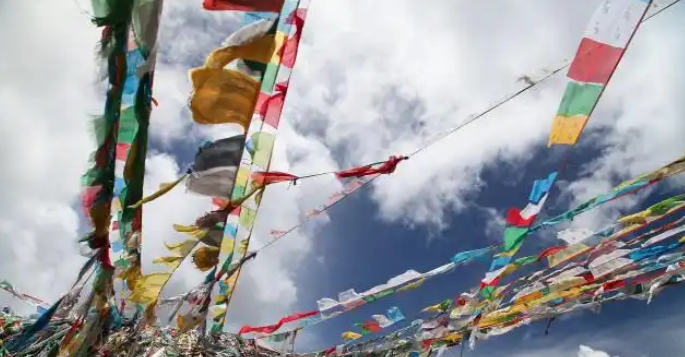
Due to our lack of knowledge about Tibetan Buddhism, we hired a guide, which cost around 50-100 yuan. Without a guide, it’s easy to get lost among the numerous Buddha statues that look similar and are only explained in Tibetan.
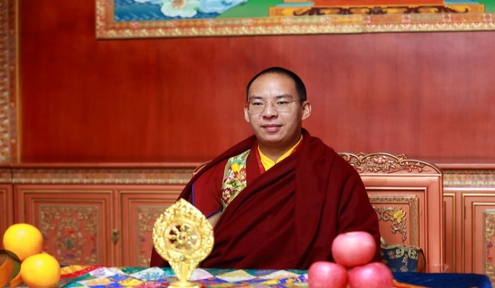
To understand Tibet, Tibetan Buddhism is an indispensable part. Similar to the Buddhism we’re familiar with, they also worship the Buddhas of the past, present, and future, Amitabha Buddha, Guanyin (White and Green Tara), various Bodhisattvas, and the Four Heavenly Kings. The biggest difference lies in their system of reincarnated lamas. They believe that reincarnated lamas are the earthly manifestations of Buddhas. Each temple has its own reincarnated lama, with the most famous being the Dalai Lama and the Panchen Lama, the spiritual leaders of the Tibetan people. They are considered the reincarnations of Guanyin Bodhisattva and Amitabha Buddha, respectively. The current Dalai Lama is the 14th, Tenzin Gyatso, who currently resides in Dharamsala, India, while the Panchen Lama is the 11th, Gyaltsen Norbu, who is in China.
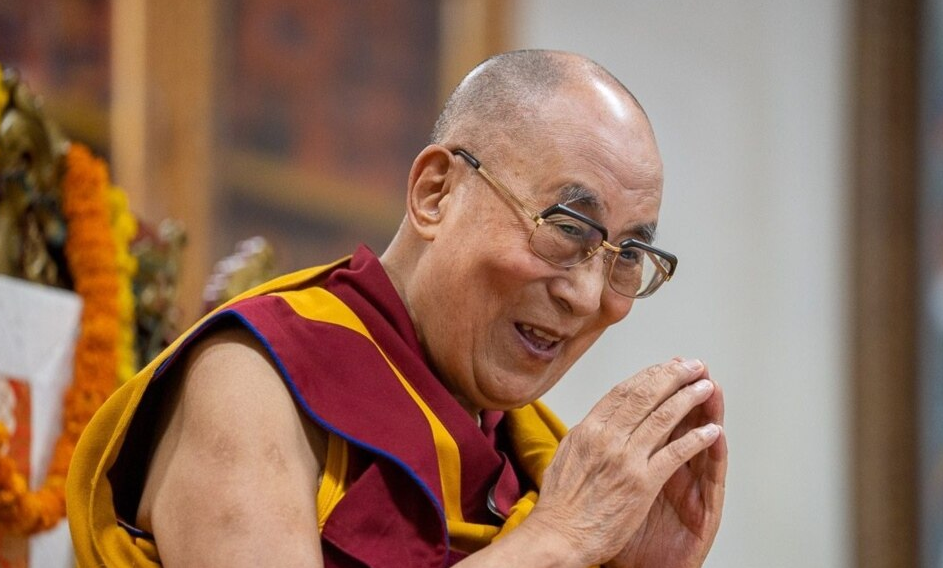
The Dalai Lama and the Panchen Lama hold equal religious status, with the former governing the front part of Tibet and the latter managing the rear part. In terms of secular status, because Guanyin oversees more secular affairs and Lhasa’s advantageous location, the Dalai Lama’s secular power is significantly greater, and his influence is more far-reaching.
There are still many human-powered rickshaws in Lhasa, which are very convenient for getting from the Potala Palace to the Jokhang Temple, as walking is too far and taking a taxi is too close, not to mention the heavy traffic.
When taking taxis in Lhasa, drivers are always enthusiastic about introducing various attractions to us. From the driver’s mouth, we learned about a small temple near the Potala Palace called Zhaki Temple, which is particularly bustling with incense. Legend has it that a Han Chinese princess died unjustly and her soul couldn’t be redeemed. A kind-hearted monk brought her to the snowy plateau and built a small temple to worship her.
In the late Qing Dynasty, some soldiers stationed in Tibet were gamblers who always lost. By chance, they offered incense at this small temple and from then on, their luck changed, and they became prosperous. Since then, people have flocked here to pray for wealth, and the small temple is always crowded.
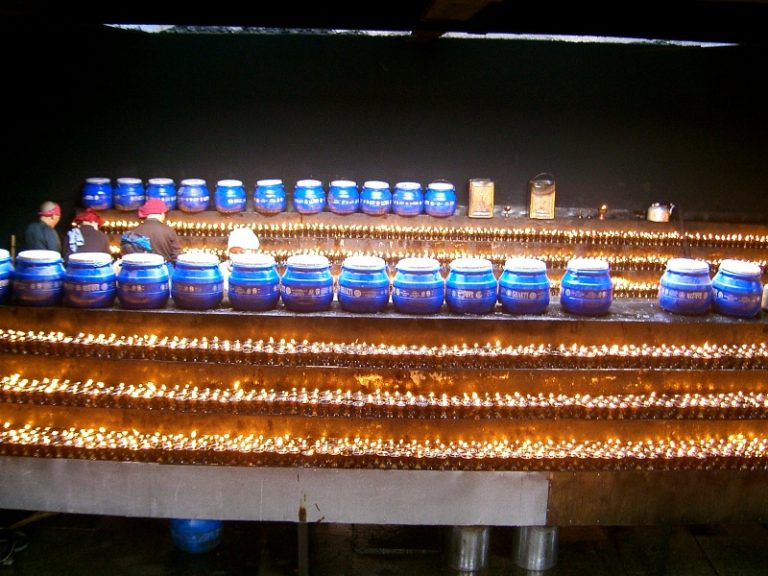
We came here attracted by its fame, lit incense, offered a jug of wine, and had our heads pressed against the table by a lama. Whether we’ve been blessed with wealth or not depends entirely on our karma with the Buddha.
The driver also recommended the debate at Sera Monastery. The so-called debate is when lamas pair up, one asking and one answering. The questioner gesticulates vigorously and forcefully, with a loud clap accompanying each question, like a wake-up call, aiming to stimulate wisdom and also implying that truth is as fleeting as the sound of a clap.
The answerer sits as steady as Mount Tai, eyes slightly open, listening intently. Though he speaks little, every word is a gem distilled from countless thoughts.
Occasionally, an old lama would come over to give some pointers. When a young lama feels embarrassed, he would touch his head with his hand, looking quite cute. The monks debating, whether asking or answering, are extremely focused, paying no attention to the dense crowd of tourists watching them. Perhaps it’s because their pure hearts only reflect the world of the Buddha.
On the third day, we set off for the Shannan region. Most of Tibet’s population is scattered in the winding Himalayas. One-eighth of China’s land area is divided into only six prefecture-level cities. The area of Shannan City alone is nearly 80,000 square kilometers, almost half the size of Guangdong Province. The vastness and sparsity of the population mean that most of the time, tourists visiting Tibet are sitting in cars traversing mountains and valleys.
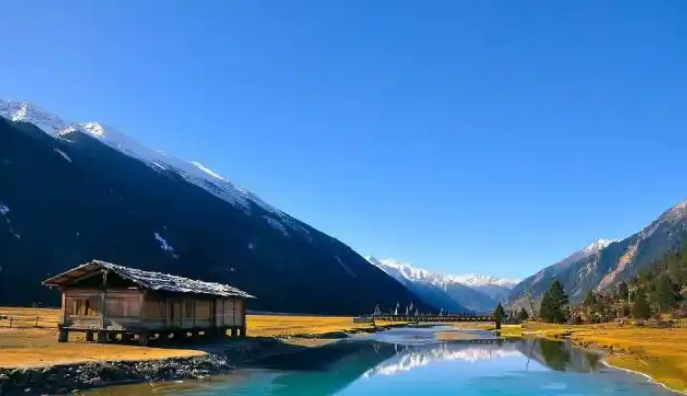
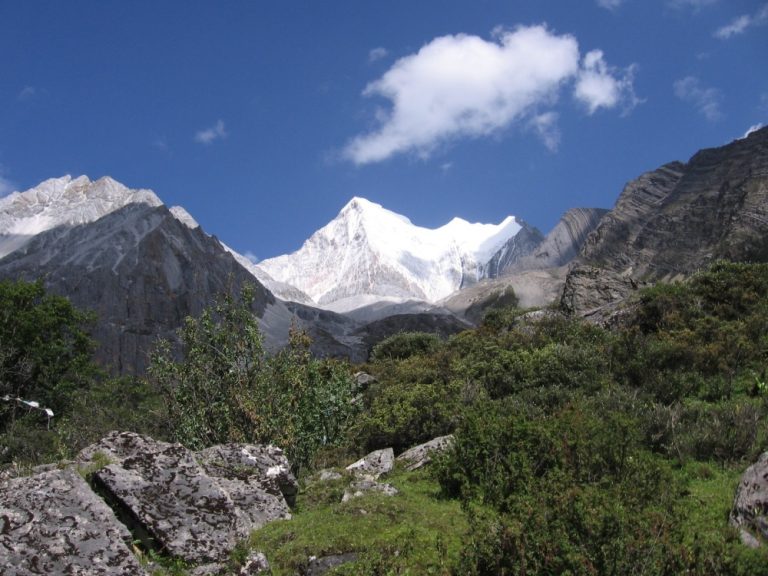
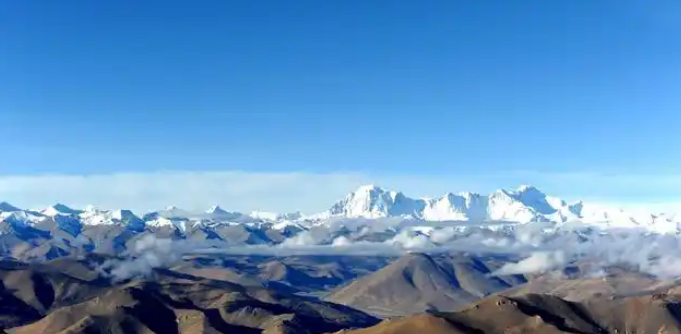
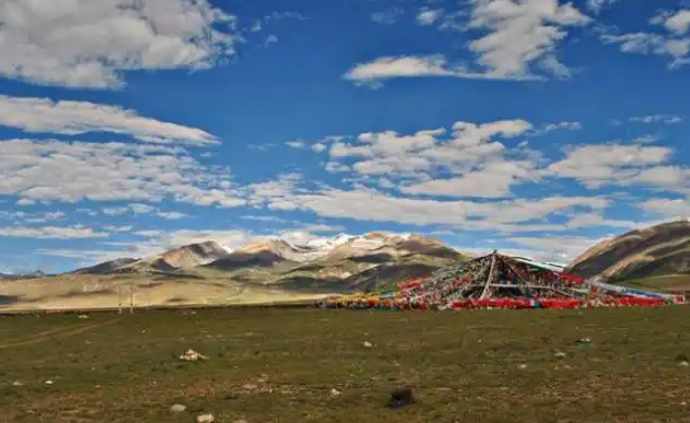
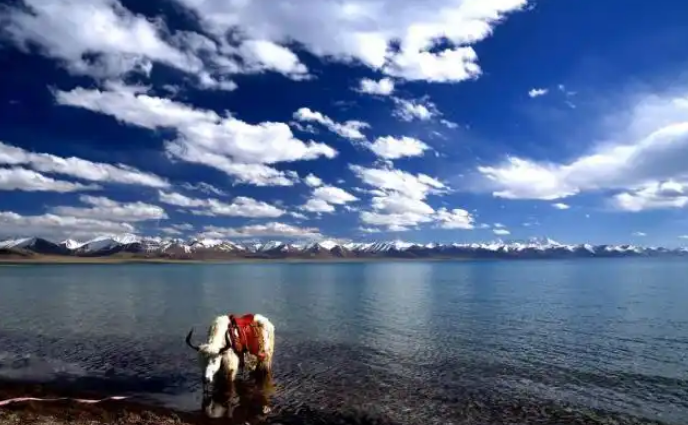
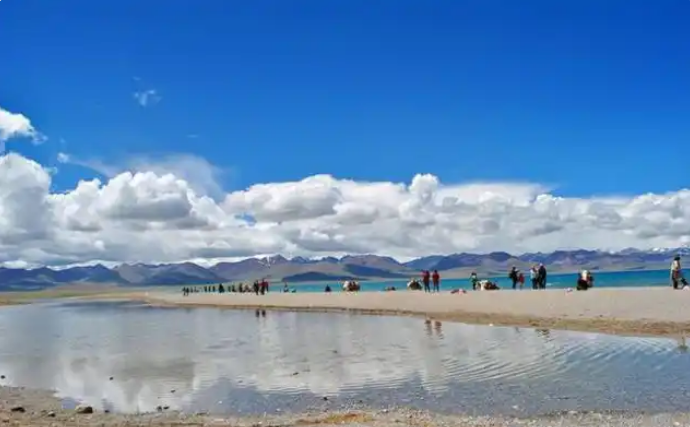
But the scenery along the way is so breathtaking that you’ll never feel bored. When we went, it was winter, and the窗外 (window outside) was a vast expanse of snow. Some snow was melting under the sunlight, reflecting a crystalline glow, while some was镶嵌 (inlaid) around the azure lake, like a dazzling diamond necklace. The calm lake nearby, the majestic mountains in the distance, and the misty clouds at the horizon made it feel like we had truly entered a fairyland on earth.
Apart from the stunning scenery, there were also various temples.
Tibetan Buddhism also has different sects, mainly the Red, Yellow, White, and Flower sects, with hundreds of smaller branches under these four. Each sect worships its own founder and reincarnated lama and inherits unique cultivation methods, giving it a sense of rivalry similar to the various martial arts sects in wuxia novels, such as Shaolin, Wudang, Emei, and Qingcheng.
Today, the Gelugpa sect is the most powerful. Known as the “Yellow Hat” sect because its monks wear yellow hats, famous reincarnated lamas like the Dalai Lama and the Panchen Lama belong to this sect.
The “White Hat” sect is the Kagyu sect, named after the white stripes on the monks’ robes. Its founder is Master Marpa, and it was further developed by Master Milarepa. Milarepa’s features are quite distinctive: a thin monk with his right hand raised to his ear, as if listening intently.
Perhaps due to the Kagyu sect’s tradition of emphasizing oral transmission over written texts, the Saikungto Monastery we visited on the fourth day belongs to this sect. It’s said that female tourists may encounter some inappropriate treatment when visiting this temple, but we didn’t experience it. However, some rooms were marked as male-only, with only Vajra sculptures inside. I’m not sure what the significance behind that is.
The “Red Hat” sect is the Nyingma sect, with all its monks wearing red hats. It’s said that the Nyingma sect traces its lineage back to Guru Padmasambhava and is the oldest among all the sects. The word “Nyingma” means “ancient” in Tibetan. This sect has a temple standing on the peak of mountains, surrounded by cliffs, which is quite spectacular.
Legend has it that Guru Padmasambhava practiced here for seven years and seven days, making it the temple where he practiced the longest. After the water offered in front of the statues in the temple freezes, distinct water droplets can be seen evenly distributed in the bowl, resembling a lotus blooming in ice. The monks believe this is a manifestation of the temple’s spiritual energy, while I tried to think of a scientific explanation but failed.
Around the Kaju Monastery, there are many rare birds, attracting many bird photographers who come here specifically. The most famous among them is the monal pheasant. Its scientific name is Lophophorus impejanus, a first-class protected animal and also the national bird of Bhutan. The male is extremely colorful, like a rainbow, and very beautiful.
The monks at Kaju Monastery feed the monal pheasants every morning, so tourists have a good chance of encountering these well-fed and leisurely birds when strolling outside the temple at 9 a.m.
The remaining “Flower Hat” sect is the Sakya sect. A well-known figure in this sect is the legendary Sakya Pandita. However, our itinerary didn’t include a visit to a temple related to this sect. I hope to fill this gap next time.
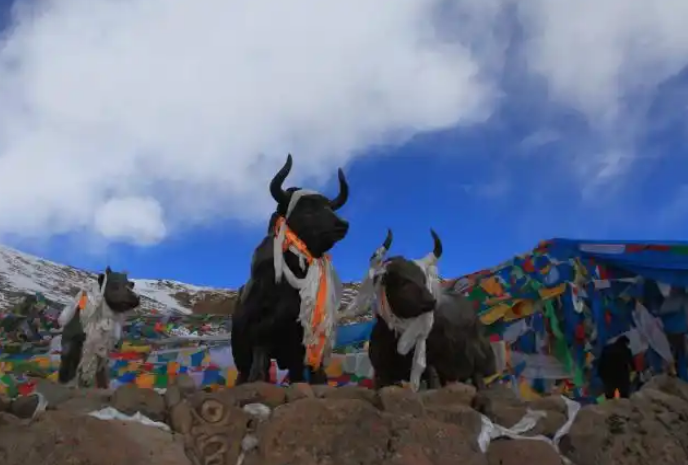
There are many customs to observe when visiting Tibetan Buddhist temples. For example, photography is not allowed inside the halls. When pointing to Buddha statues, one must keep the five fingers together with the palm facing up. When paying homage to Buddha statues, one should press the palms together with the thumbs tucked into the palms, indicating that the worshipper has put away their proud heart, and so on.
However, temples are quite casual when it comes to money. Generally, there are no requirements for offering incense money, and it can even be used as change for tourists. Perhaps it’s because most Tibetan temples are filled with countless treasures, and the lamas also enjoy the treatment of civil servants, so they don’t attach much importance to worldly possessions like money.
Compared to the ascetic life of monks meditating in front of dim lamps and ancient Buddhas, I’m more interested in the lives of ordinary Tibetans.
The only village we truly stopped to visit was Zhadui Village, which claims to be the highest village in the world at sea level. In addition, we passed through many villages of various sizes and stayed in counties along the way.
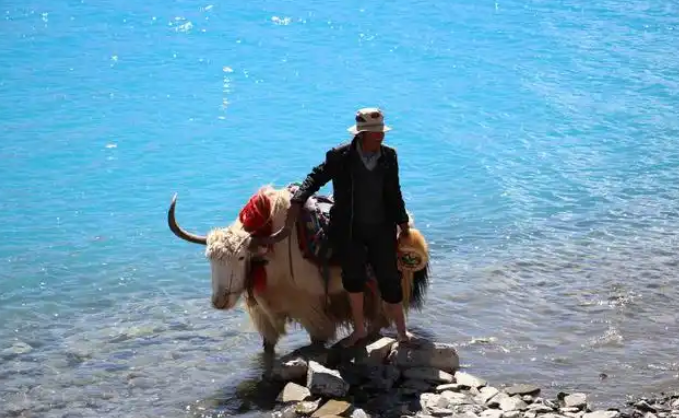
The Tibetans have lived on the “harsh and cold” Qinghai-Tibet Plateau since ancient times, with harsh natural conditions. However, they have an extremely strong sense of happiness and are very content with their current lives, which is something I rarely see in coastal developed cities. They don’t seem to feel sad because of the scarcity of materials and the inconvenience of life, nor do they feel envious when they see tourists dressed in fancy clothes and carrying electronic devices.
What arises from this is a warm kindness. They are willing to do their utmost to help outsiders in difficulty, without asking for results or rewards. Perhaps this is the result of the compassionate teachings of Buddhism.
This was my first experience of visiting Tibet. But Tibet is like a book, and different people will have different feelings and experiences at different times. If you’ve also been there, I’d love to hear what Tibet looks like in your eyes. If you’re planning to go, prepare some good wine, as I have a basketful of stories to tell you.
Fate will bring us together again, fellow travelers!