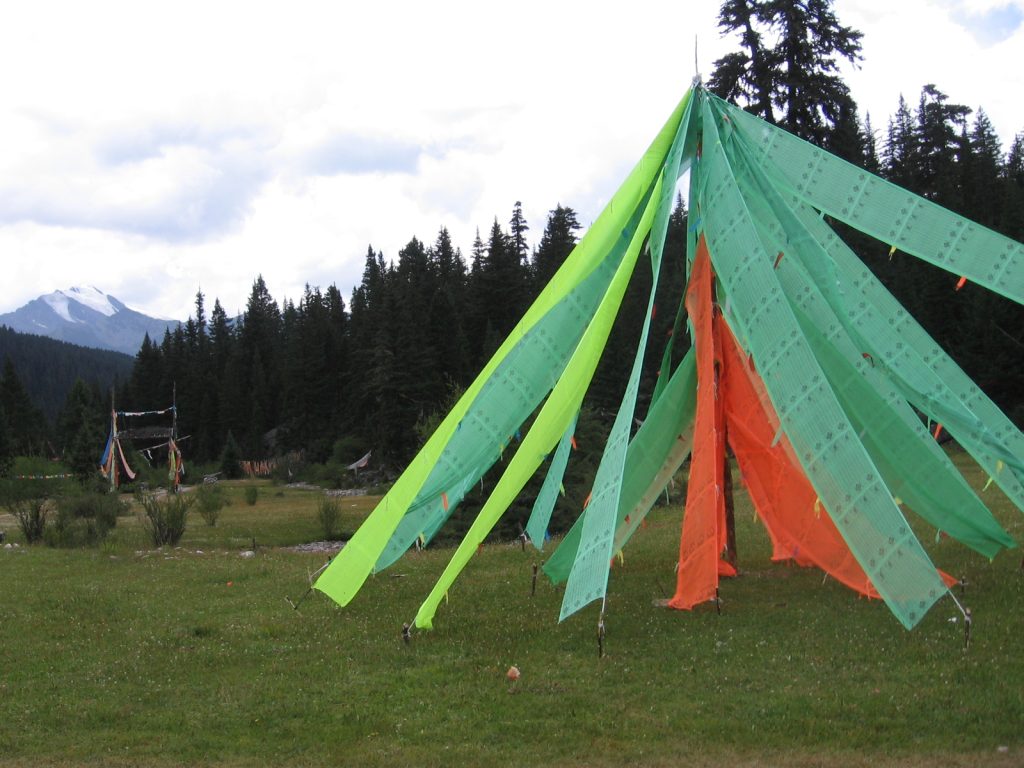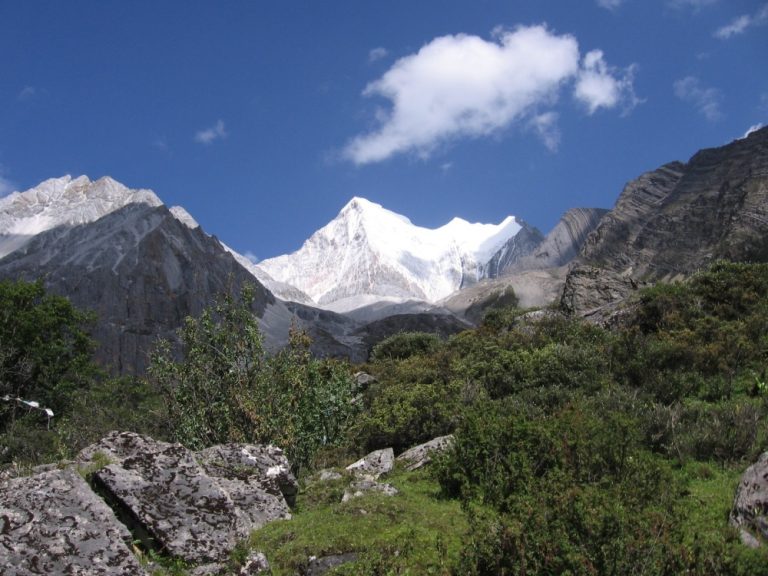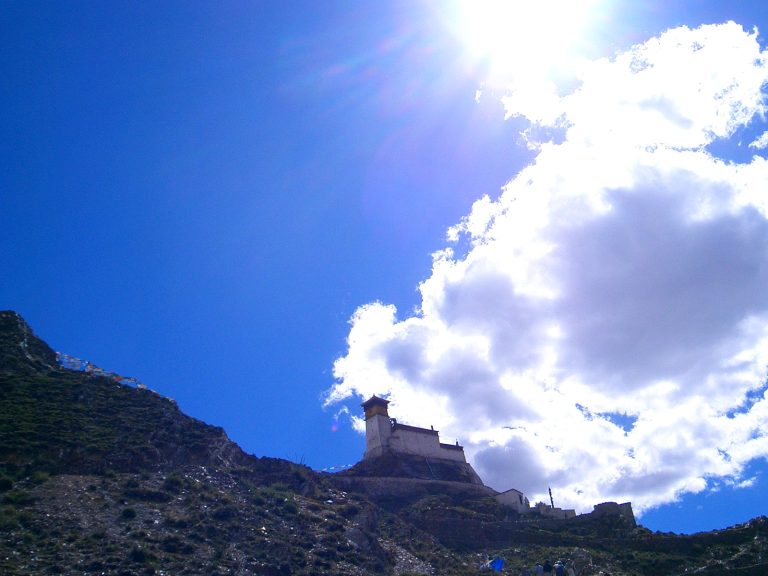
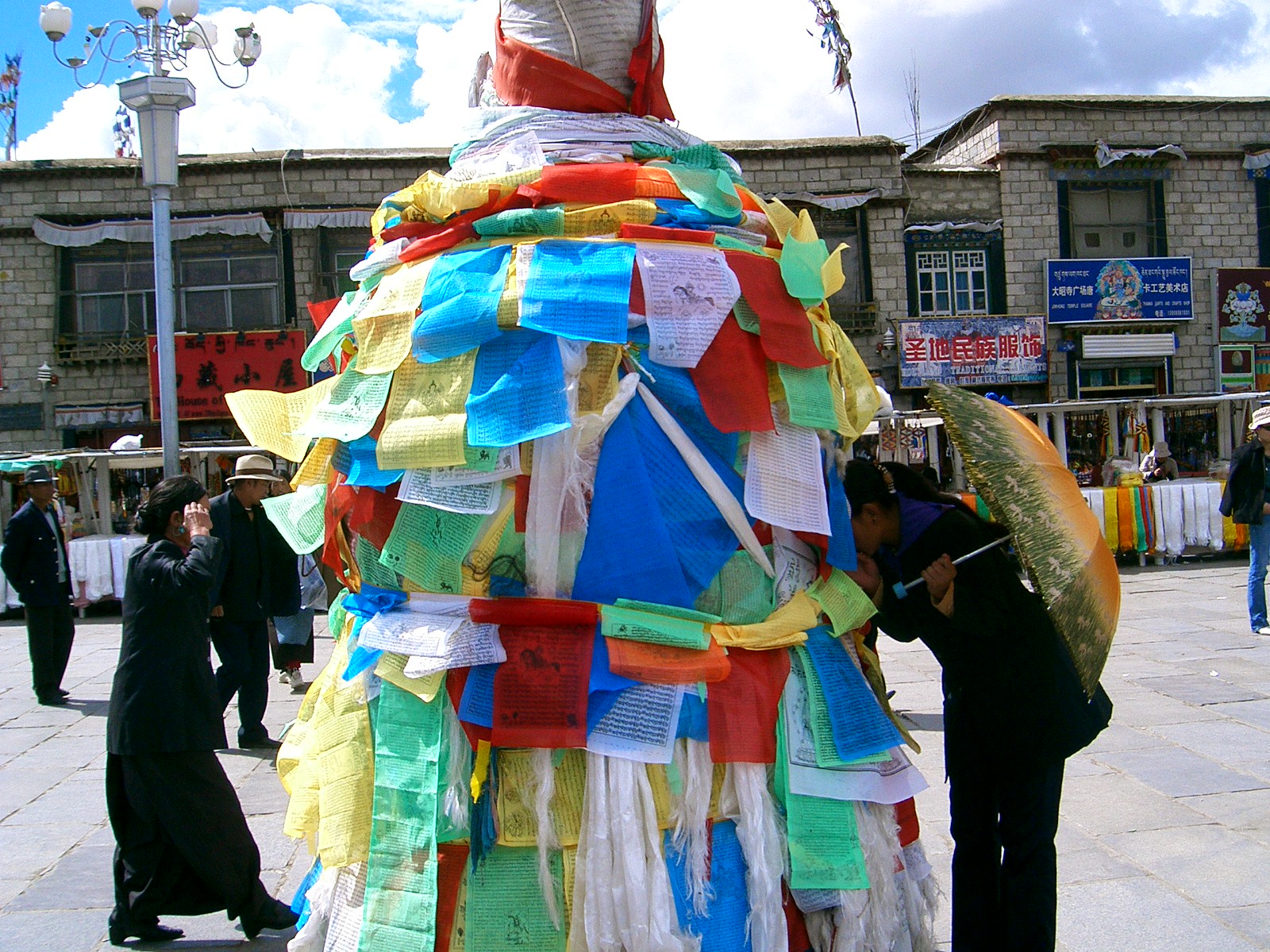
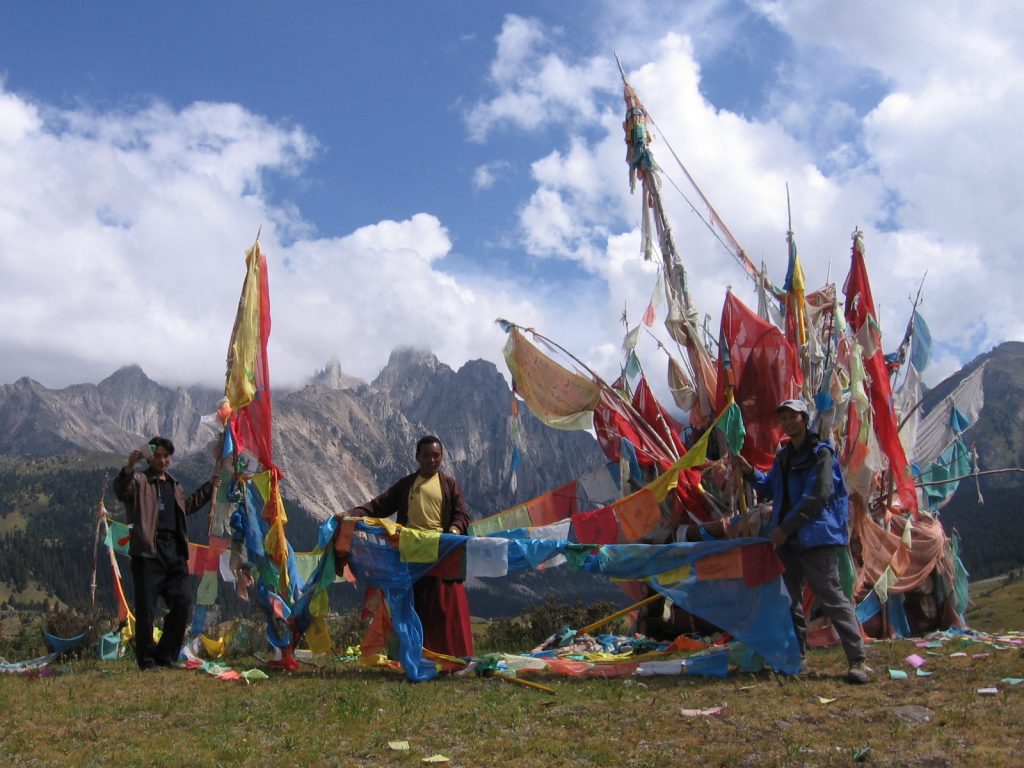
If it’s your first time visiting Tibet or any Tibetan region, you’ll undoubtedly be captivated by the vibrant prayer flags fluttering in the wind. They adorn rooftops, the foothills of snow-capped mountains, meadows, forests, mountain passes, mani stone piles, and stupas, their rustling sound in the fierce wind seeming to whisper ancient tales. Harmoniously blending with nature, they form a unique and unparalleled landscape found nowhere else in the world. One could say that wherever you see prayer flags dancing in the wind, you’ve entered the realm of Tibetan life.
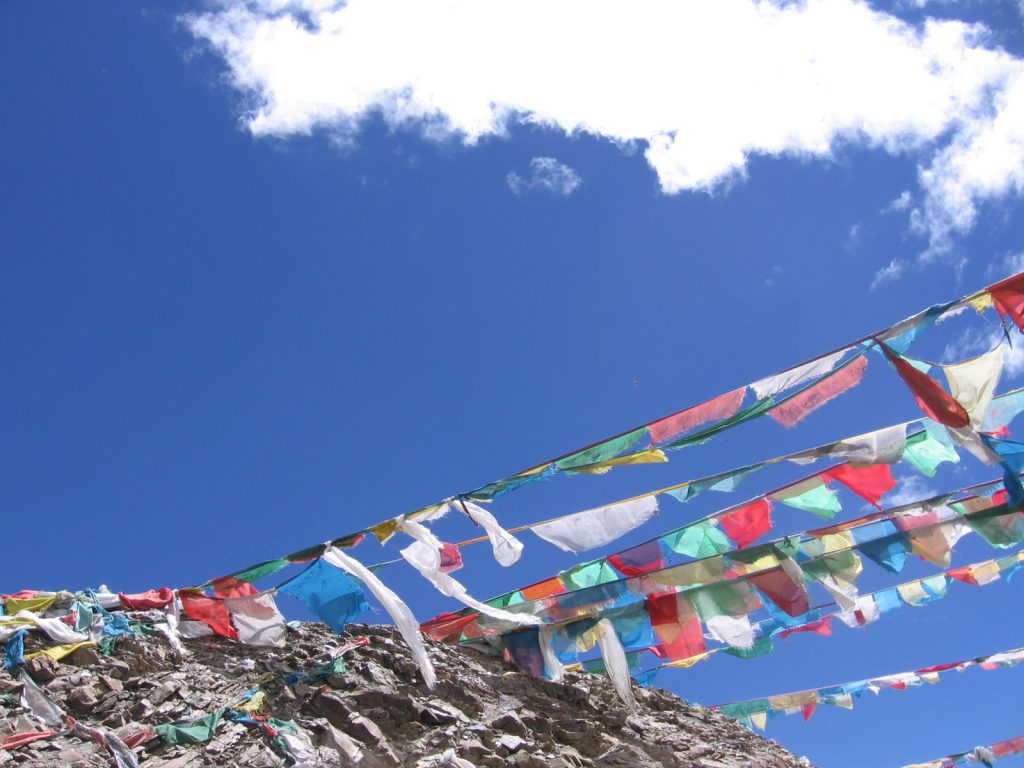
Like many others, my first encounter with prayer flags left me in awe of their beauty, yet puzzled about their meaning.
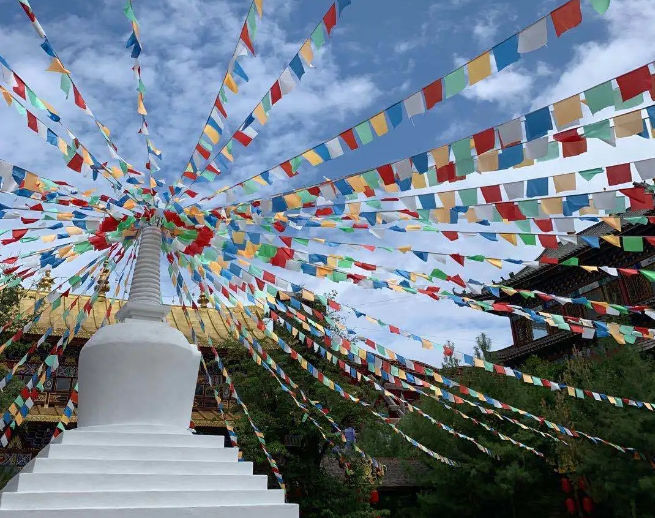
The flags come in various colors, primarily red, blue, green, white, and yellow, occasionally with lighter shades of red, green, or blue—but rarely black, purple, or other hues. Their shapes also vary, with the most common being square, triangular, or rectangular.
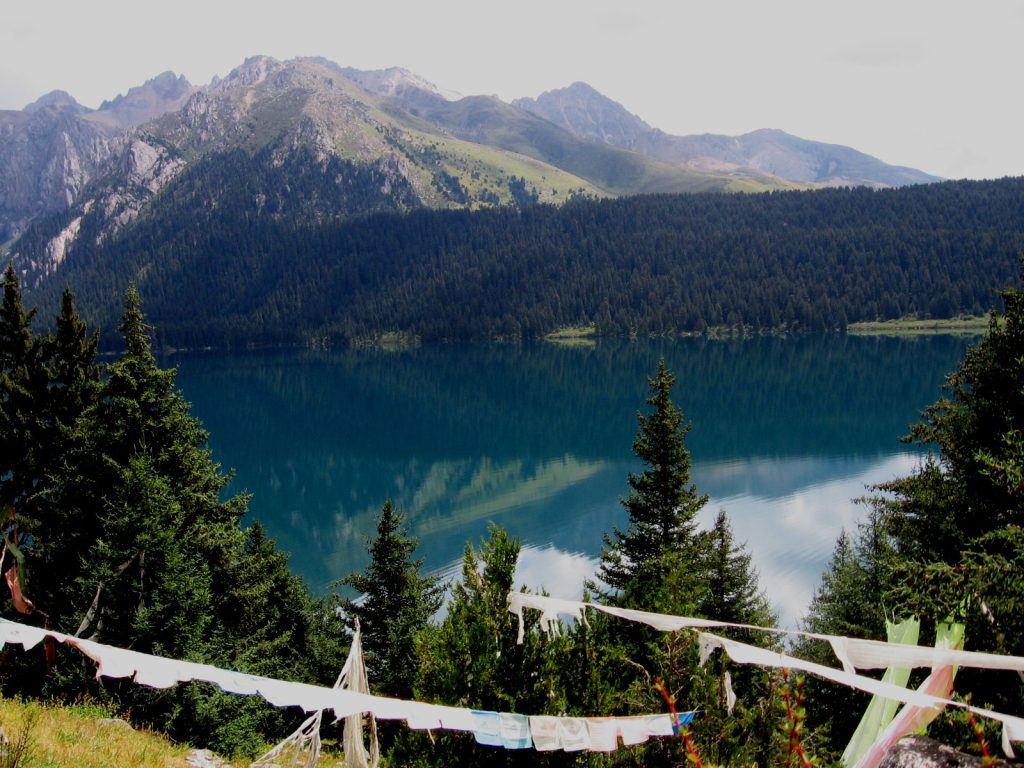
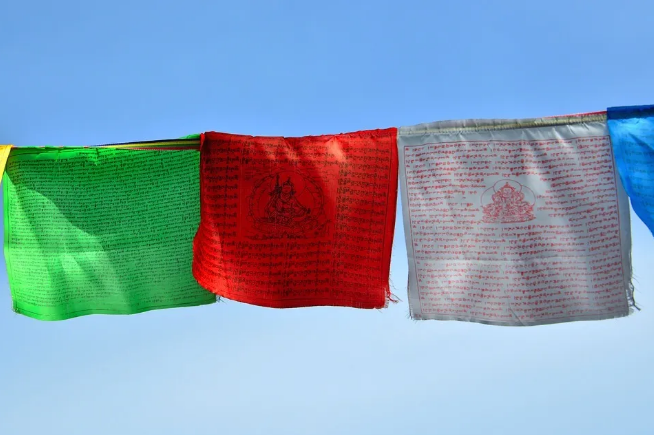
In Tibetan regions, prayer flags are also known as Lungta (Wind Horse Flags). In Tibetan, “Lung” means wind, and “Ta” means horse, hence the name. The flags are typically printed with sacred mantras such as the “Om Ma Ni Pad Me Hum” (Six-Syllable Mantra) or the “Om Ah Hum” (Eight-Syllable Mantra), as well as images of Buddhas and the Five Sacred Animals: lion, tiger, dragon, horse, and garuda.
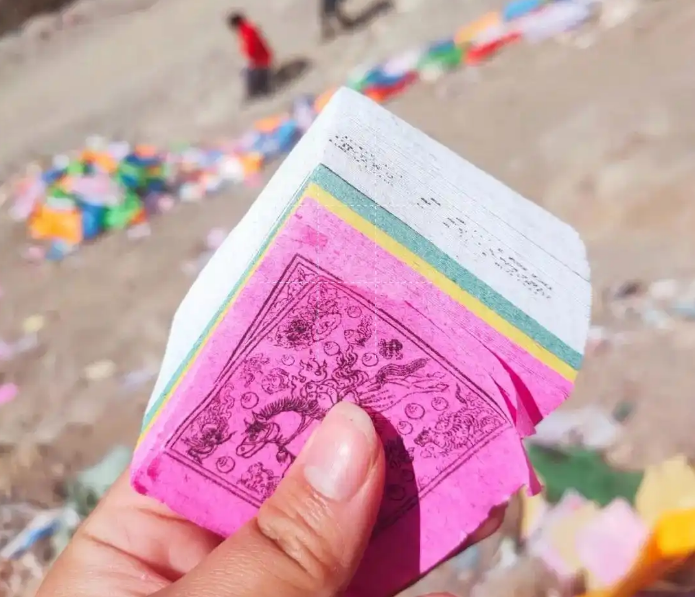
A common design features a majestic horse at the center, carrying the Three Jewels of Buddhism (Buddha, Dharma, Sangha) ablaze with flames. The four corners are adorned with protective deities: the garuda (symbolizing profound wisdom), the dragon (symbolizing penetrating insight), the tiger (symbolizing vigilance), and the lion (symbolizing victory). This arrangement represents the five elements—metal, wood, water, fire, and earth—signifying the eternal cycle of life. It also corresponds to the five directions: east, south, west, north, and center. Each time the wind moves the flags, it is believed to carry the prayers skyward, equivalent to reciting the scriptures once. This is why prayer flags are often hung in open, elevated, and windy areas.
Besides cloth flags, there are also smaller paper versions, usually square or triangular, which are scattered at mountain passes or along trails. Tossed into the wind, they are meant to carry prayers to the heavens, seeking blessings for safety and good fortune.
Every year, on the 15th day of the fourth month in the Tibetan calendar, a grand ceremony is held to replace old prayer flags. Devotees eagerly collect the worn-out flags, believing they bring protection and luck.
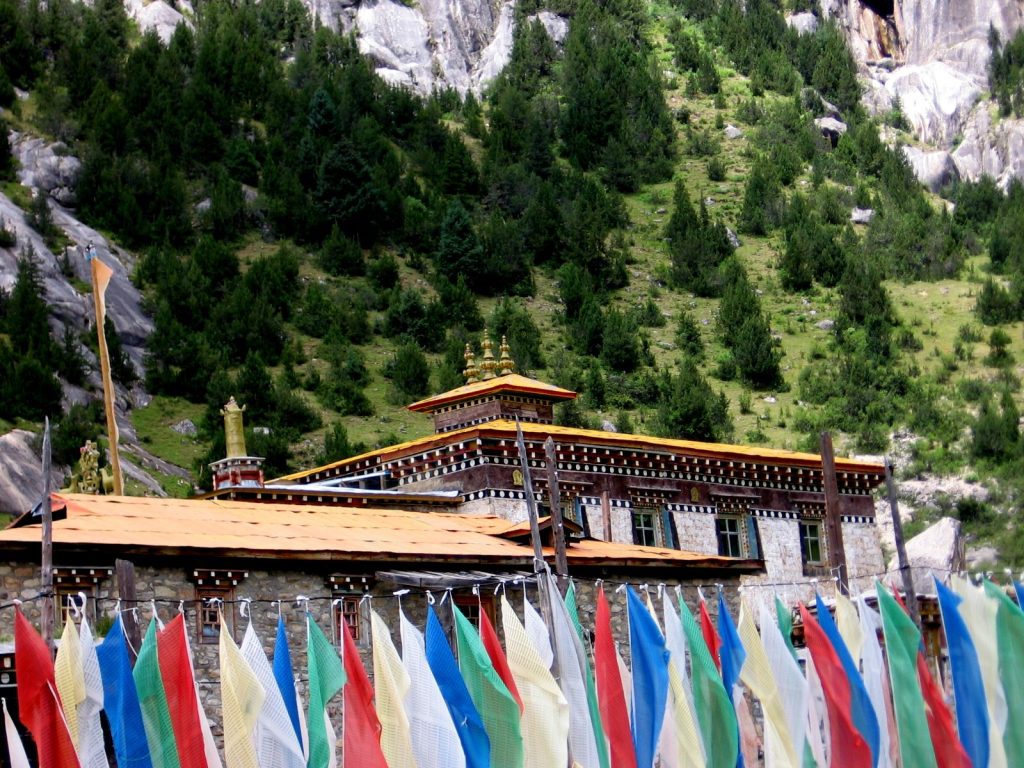
Standing beside the prayer flags, buffeted by the plateau’s relentless winds, you might witness elderly Tibetan women circling a mani pile wrapped in flags, spinning prayer wheels and chanting mantras in a low murmur. In their quiet devotion, you can sense a profound peace and piety.
As the Sixth Dalai Lama, Tsangyang Gyatso, once wrote:
“Wherever I am seen, my eyes are with you.
Wherever I am unseen, my heart is with you.”
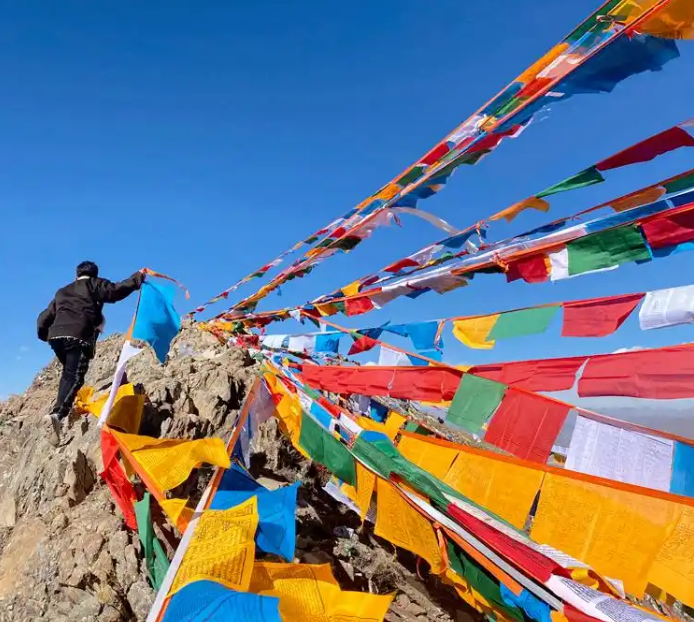
For centuries, prayer flags have carried Tibetans’ hopes for a better life, their grief for departed loved ones, their reverence for nature, and their praise for the Buddha and sages. They serve as a bridge between the earthly and the divine.