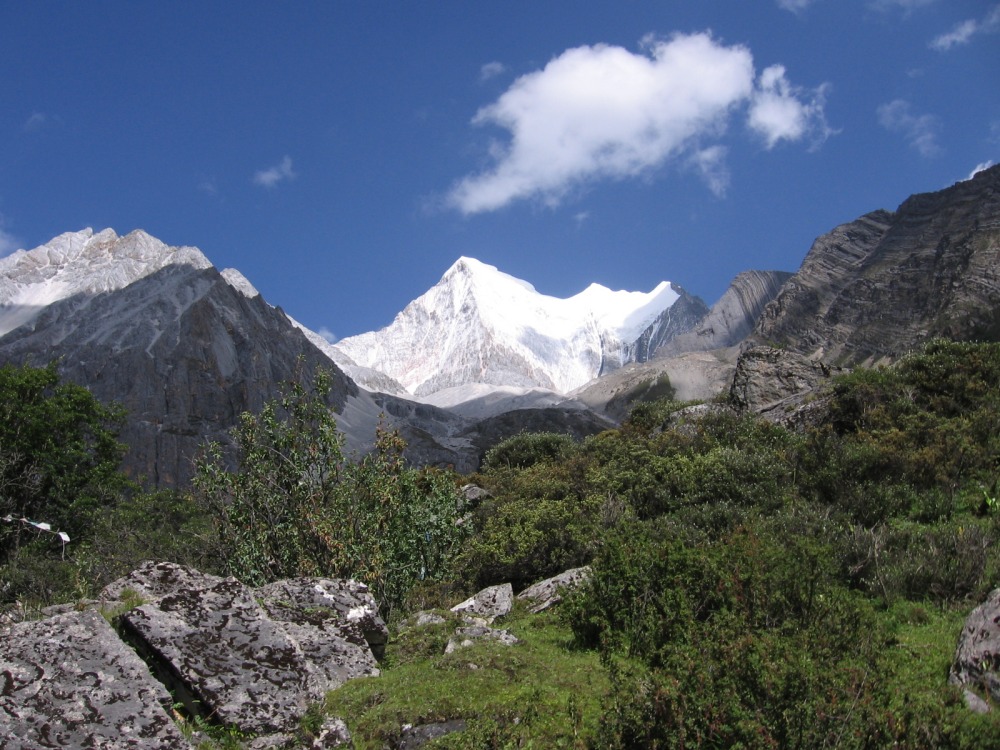
In 1928, American explorer Joseph Rock set out from Muli in Xikang, passed through Jiulong, and then traversed Daocheng and Yading, delving deep into the Gongga Snow Mountain region. After two journeys through Daocheng Yading, he published articles and photographs he had written and taken in the American magazine National Geographic, introducing this fairyland to the world for the first time.
Thus, in 1933, British writer James Hilton drew inspiration from Rock’s articles and photographs to create the novel “Lost Horizon,” in which he first referred to this region as “Shangri-La.”
Later, the “Rock Route” became a classic among outdoor hiking enthusiasts, attracting a flood of tourists from home and abroad. Hikers also developed another classic route from Lijiang to Lugu Lake and then to Yading. All these routes revolve around Yading Scenic Area, the “Shangri-La in people’s dreams.”
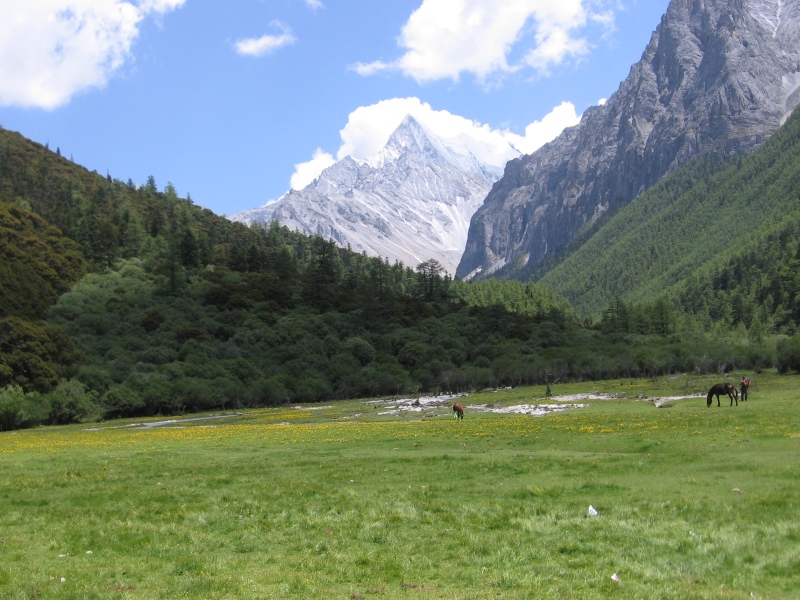
The Tibetan name for Yading Scenic Area is “Nianqing Gongga Risom Gongbu,” ཉིན་སෆེན་ (nyin seng), meaning “the sacred land of the three guardian great snow mountains.” Since there is a Tibetan village named Yading at the foot of the mountains in the scenic area, the area was named “Yading” and has retained this name to this day. Yading Scenic Area not only boasts rich natural vegetation and vast alpine meadows but is also dotted with numerous streams and lakes fed by melting snow, creating a vertical natural landscape where “four seasons coexist on one mountain.”
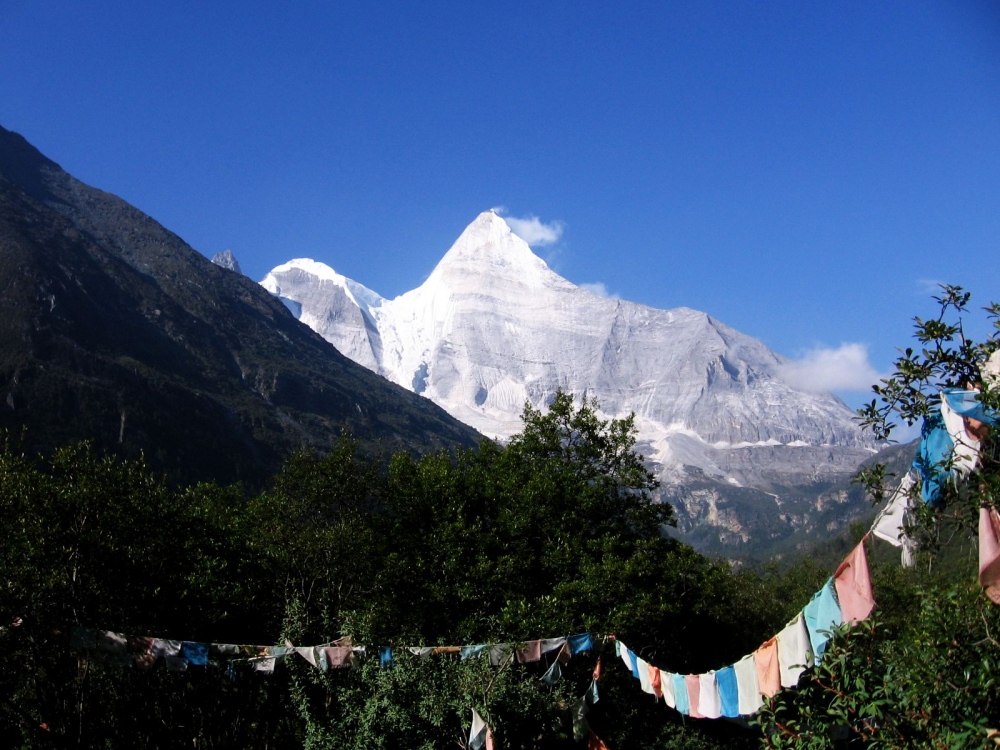
The most renowned attractions within the scenic area are the three sacred mountains, arranged in a triangular formation, each with its unique characteristics and stories. The northern peak, “Xiannai Ri,” standing at 6,032 meters above sea level, is the incarnation of Guanyin Bodhisattva. The southern peak, “Yangmaiyong,” at 5,958 meters, represents Manjushri Bodhisattva. The eastern peak, “Xianuoduoji,” also at 5,958 meters, symbolizes Vajrapani Bodhisattva. Local Tibetan people have worshipped these three sacred mountains for generations.
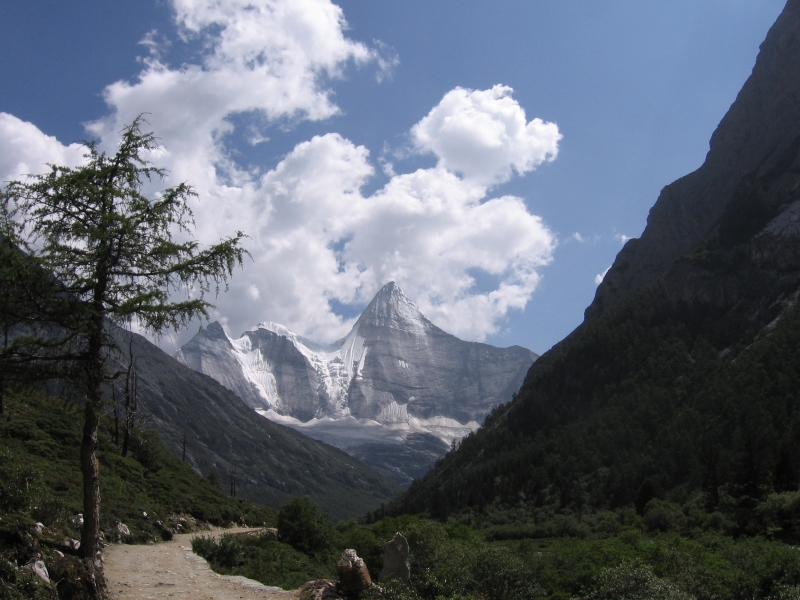
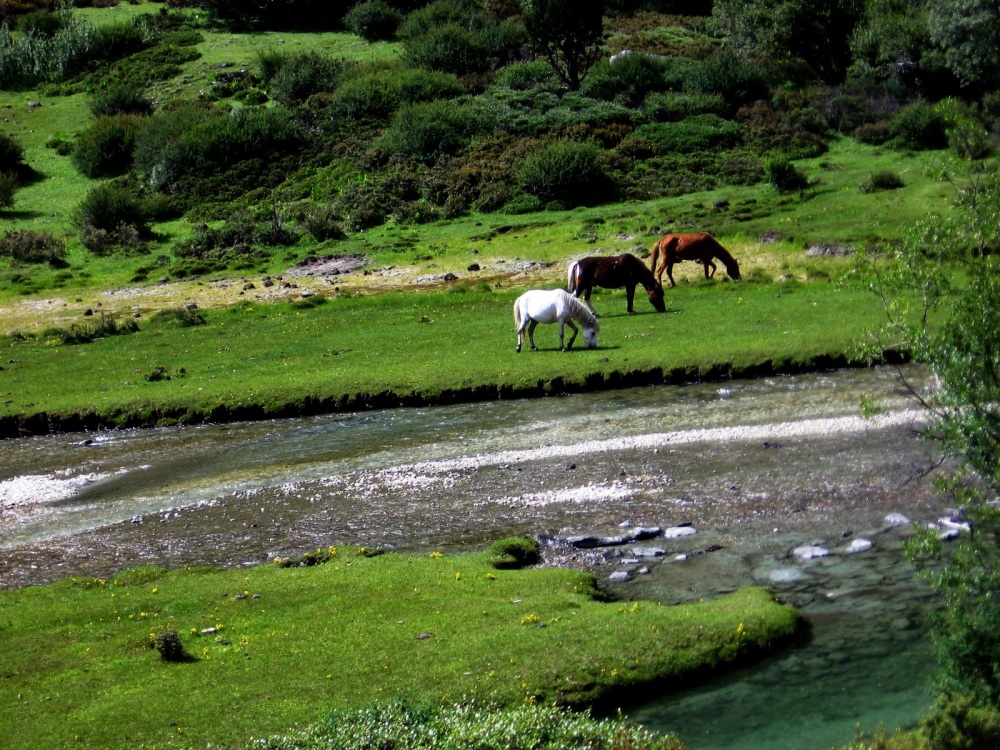
Starting from Yading Village and ascending along the mountain path in Yading Scenic Area, visitors can choose to ride horses or hike (it is said that electric shuttle buses are now available). The first stop is Chonggu Temple, and notable “haizi” (lakes) include Zhenzhu Hai (Pearl Lake) and Niunai Hai (Milk Lake).
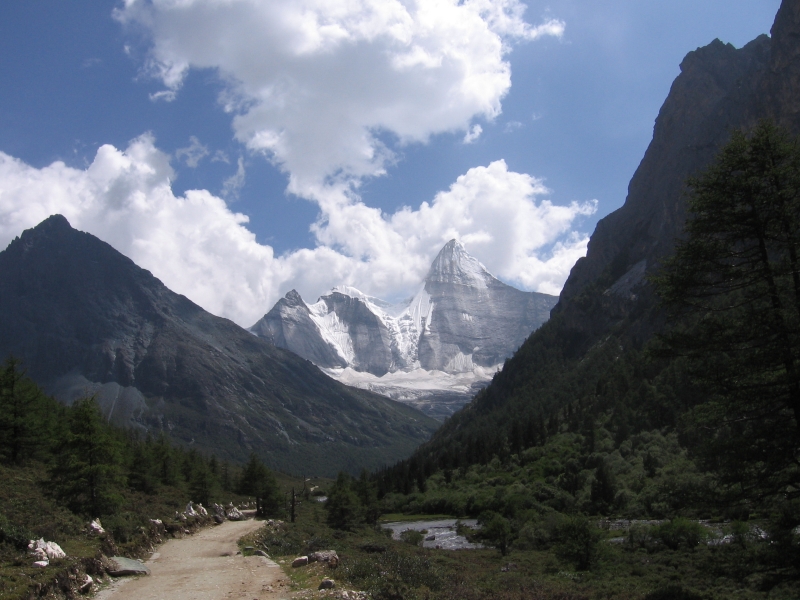
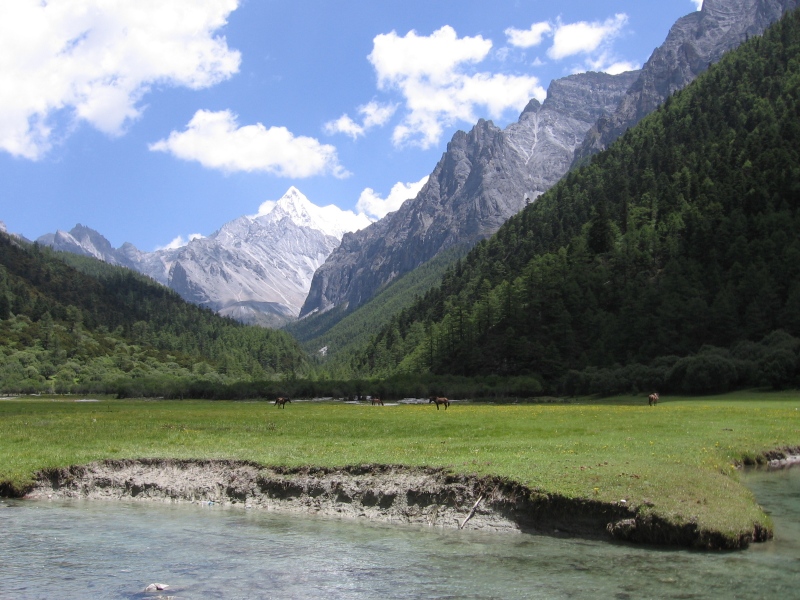
The photo introduction in this article primarily features photographs of “Yangmaiyong” taken along the hiking trail from Chonggu Temple up to Luorong Pasture, for everyone’s appreciation.
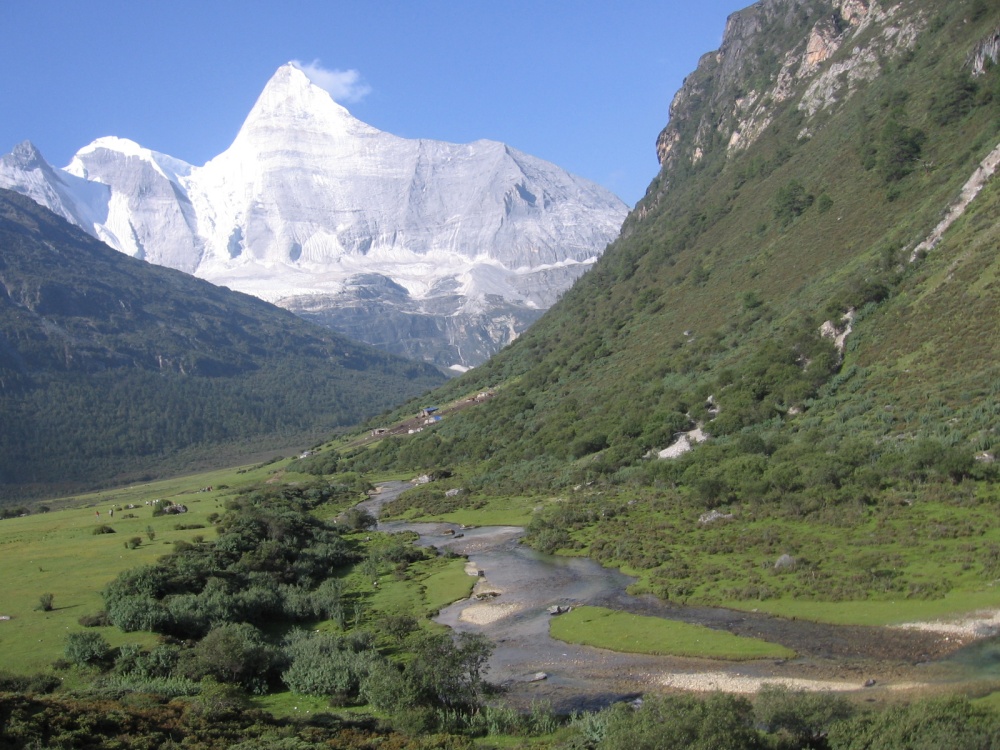
With the development and improvement of the scenic area, it is now very convenient to visit Daocheng Yading. Those short on time can choose to fly directly to Daocheng County and then head straight to Yading for sightseeing. If departing from Chengdu, you can opt for a self-drive trip, passing through Ya’an, Kangding’s Zheduo Mountain, and reaching the photography paradise of Xinduqiao. The scenery along the way is breathtaking, and you are sure to fall in love with the unique Tibetan landscape. After Xinduqiao, you will pass through Yajiang, Litang, and Haizi Mountain before arriving in Daocheng, making this a classic self-drive route.
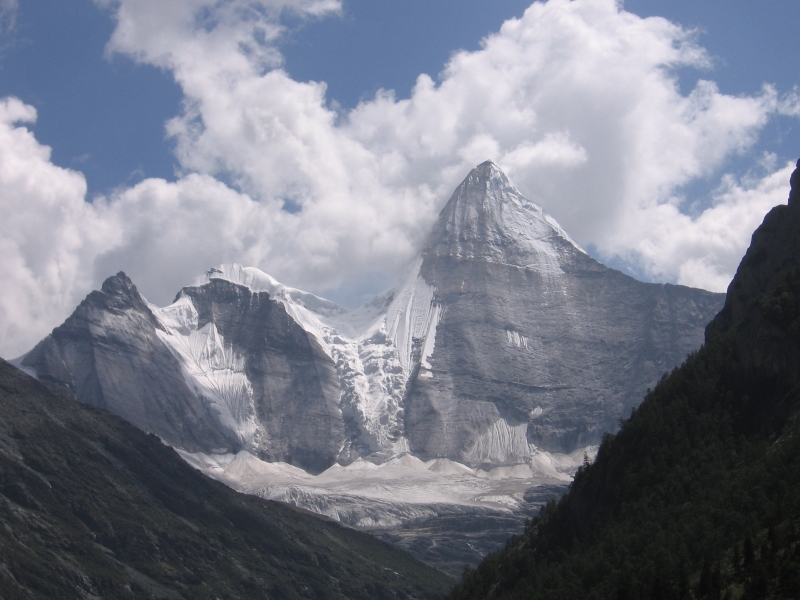
If you choose to embark on a self-drive journey from Yunnan, you can take the route from Lijiang to Benzilan and Derong, passing through the Great Snow Mountain Scenic Area, Shangri-La Grand Canyon, and Xiangcheng before finally reaching Daocheng. This is a less-traveled route, dominated by canyons and mountains with significant elevation changes, offering equally stunning scenery.
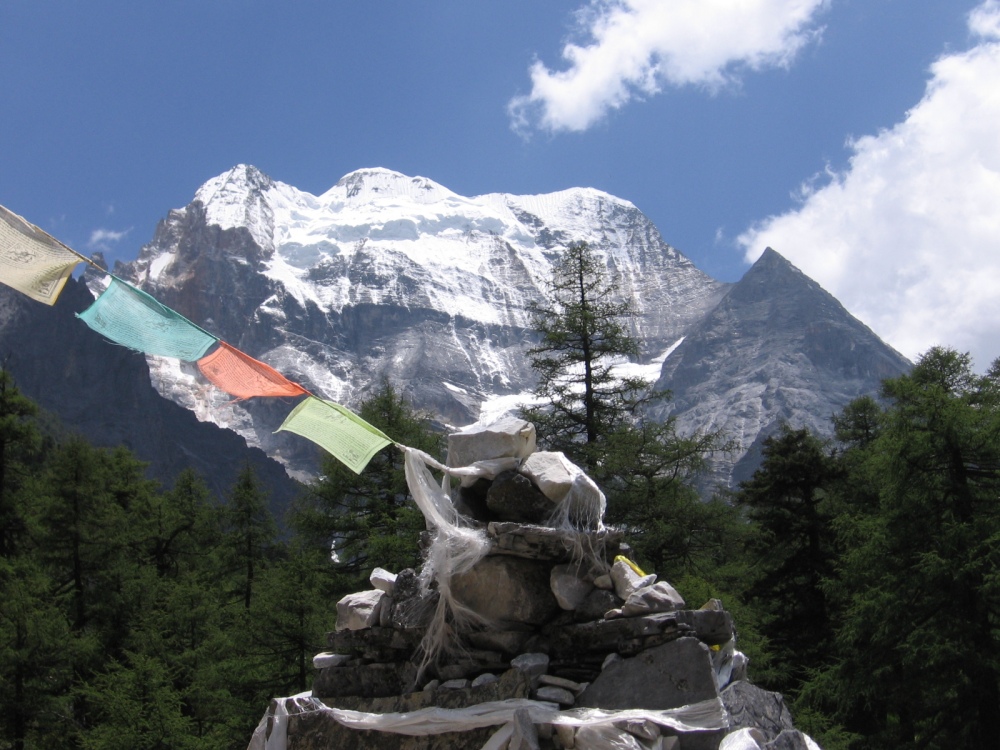
If you are an outdoor enthusiast, then embark on the “Rock Route” (Muli-Jiulong-Yading) or the Lijiang-Lugu Lake-Yading route mentioned at the beginning of the article. I am sure you will have a rewarding experience.